A space designed for conservation and education
Providencia Ecological Park spans 524 hectares divided into two areas: the Providencia Reserve (414 hectares), located in the upper part of the Amaime River basin, and the Piedechinche Hacienda (110 hectares), where public activities are held. While the Reserve focuses on the protection of strategic ecosystems, the Hacienda integrates actions of ecological restoration, wildlife monitoring, and programs for students, visitors, and organized groups.
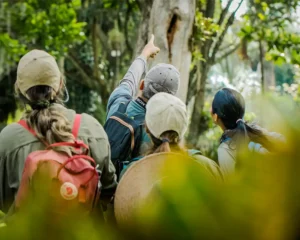
The experience at the Park combines guided tours along ecological trails, birdwatching areas, and cultural activities that allow visitors to explore the environment safely and with guidance. Among the most visited spaces are the Bird Garden and the Caracolí Trail, where local species can be observed in an environment designed to attract them, as well as a shaded walk through native trees.
This tour, designed to strengthen people’s relationship with the natural environment without disrupting its balance, is not just recreational. By visiting the Park, people also connect with a conservation and restoration business project with concrete impacts on biodiversity. Since its creation, more than 380,000 trees of native species have been planted, focusing on the recovery of the Tropical Dry Forest and the High Andean Forest. These ecosystems, among the most threatened in the country, play a key role in climate and water regulation, soil protection, and habitat for sensitive species.
To date, more than 110 hectares of vegetation cover have been restored, and nearly 300 bird species have been recorded. Through monitoring with camera traps and scientific records, the Park has also documented the presence of species like the cane fox and the jaguarundi, which directly depend on these ecosystems for survival.
This project has been key to monitoring wildlife in restored areas. Thanks to this tool, the presence of mammals such as the puma (Puma concolor), ocelot (Leopardus pardalis), and soche deer (Mazama rufina), as well as numerous species of birds and small nocturnal mammals, has also been recorded. These findings confirm the ecological value of the Park as a refuge for native wildlife, in addition to its contribution of technical information to guide conservation actions in the area.
Services, spaces, and visitor access
Providencia Ecological Park is open to the public through guided tours. These tours offer firsthand knowledge of the richness of the Tropical Dry Forest, birdwatching at various points on the property, and walking ecological trails. Additionally, there are complementary spaces such as the La Ramada restaurant, which offers typical dishes like valluna pork chop, empanadas, and sugarcane guarapo, alongside a store with local products and a meeting room for educational or corporate events.
Access is by prior reservation and in guided tour format. The general fee is $19,000 COP, with discounts available for school groups, senior citizens, international visitors, birdwatchers, and institutional guests. The parking area also has spaces for private vehicles, buses, and motorcycles.
A commitment that transcends the landscape
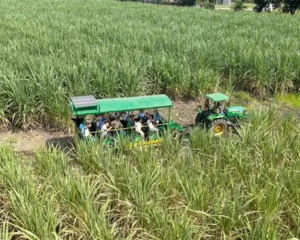
The commemoration of World Animal Day invites us to reflect on the need to protect not only species but also the spaces they inhabit. Nature offers real benefits to people: health, balance, and well-being. Therefore, protecting it is also a way of giving back what we receive from it. At Providencia Ecological Park, this task translates into concrete land management that promotes conservation, education, and responsible access to ecosystems.
“The existence of this Park demonstrates that the private sector can play an active role in the recovery and protection of biodiversity, in coordination with communities and the environment. At Providencia, we understand that conservation is a corporate responsibility, which is why we seek to create shared value by protecting biodiversity, educating from the land, and offering people a conscious and enjoyable way to inhabit nature,” said María Leonor Velásquez Rasch, director of Providencia Ecological Park.